How Hail Repair Costs Are Determined in Texas
Repair-cost disagreements — not whether damage exists — drive many DFW hail disputes. Here's how a repair estimate is actually built, and when a second opinion helps.
By Marshall Smith, IAUA CPAU Certified Insurance Appraiser · Published August 18, 2026 · 8 min read · Filed under Insurance Claims
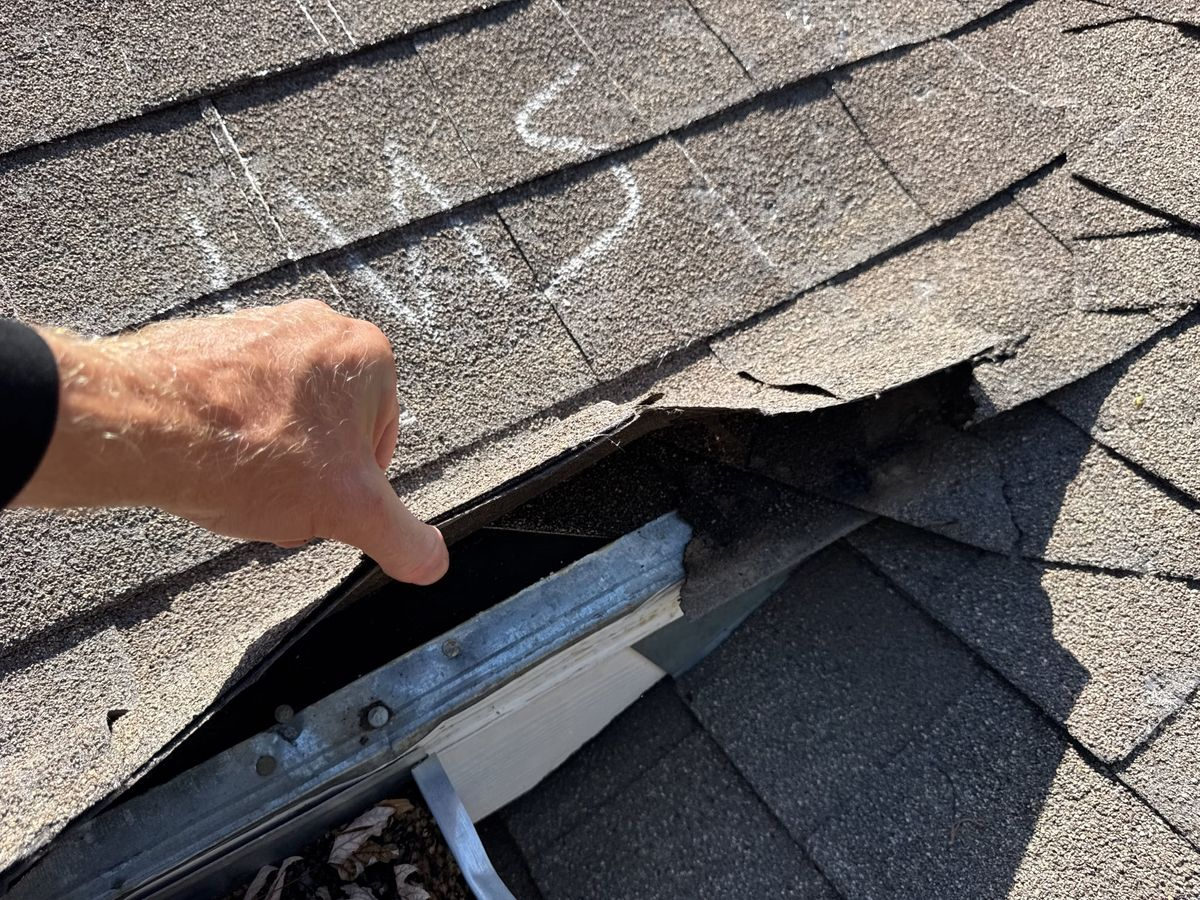
Hail repair costs in a Texas claim are determined by a line-item estimate: every damaged component is scoped, measured into quantities, and multiplied by a unit price for local material and labor, then adjusted for factors like code upgrades, matching, and contractor overhead and profit. When two estimates on the same roof disagree, the difference almost always traces back to one of those inputs — a missed line item, a different quantity, or a different unit price — not to a mystery. A second, independent estimate helps when you need to see exactly where those inputs diverge and whether the gap is large enough to resolve through the appraisal process.
If you have already agreed that the hail damage exists but cannot agree on what it costs to fix, you are in the most common hail dispute we see across the DFW Metroplex. This post walks through how the number is built so you can read your own estimate line by line and decide your next step.
Why two estimates on the same roof rarely land on the same price
It surprises many homeowners that two qualified professionals can inspect the identical roof and produce repair figures that are thousands of dollars apart. That does not mean one party is acting in bad faith. Repair estimating is a series of judgment calls stacked on top of measurements, and small differences at each step compound.
A repair estimate has three moving parts, and a disagreement can live in any of them:
- Scope — which components are included as damaged and needing repair or replacement.
- Quantity — how much of each component (squares of shingles, linear feet of ridge, number of vents).
- Unit price — the dollar amount assigned to each unit of that work.
Two estimates might agree that the roof needs replacement but differ on whether the disagreement includes detached structures, gutters, screens, or interior water staining. One might count the roof at a different square footage because of pitch or waste calculations. One might price a laminated shingle where the other priced a three-tab. Each of these is a specific, checkable line — which is exactly why comparing estimates side by side is so productive.
How a line-item repair estimate is actually built
A defensible repair estimate is not a lump sum scribbled on a proposal. It is built the way a contractor would actually order materials and schedule labor, one task at a time. Most professionals in this market use estimating software — Xactimate is the most common platform — that organizes the work into standardized line items. If you have never seen one, our explainer on what a Xactimate estimate is and why your claim needs one breaks down how those line items are structured and priced.
The build usually follows the sequence of the actual repair:
- Measure the structure. Roof area is calculated in "squares" (100 square feet), adjusted for pitch, and increased by a waste factor because shingles are cut to fit hips, valleys, and edges.
- Scope the tear-off and replacement. Removing the old roof, replacing underlayment, installing new shingles, and re-flashing penetrations are each separate lines.
- Add the components that ride with a roof. Ridge caps, drip edge, pipe jacks, valley metal, and ventilation are itemized rather than assumed.
- Capture collateral damage. Hail rarely stops at the shingles. Soft metals — gutters, downspouts, HVAC fins, window screens, garage doors — often show impact, and interior damage may follow a roof leak.
- Apply unit pricing. Each line receives a material-and-labor rate for the specific geographic area.
When a line is missing, the total drops — not because anyone decided the work was unnecessary, but because it was never entered. That is the most common source of a low total, and it is easy to spot once you read the two estimates against each other.
What local Texas material and labor pricing does to the number
Unit prices are not universal. Estimating platforms publish pricing that varies by region and updates over time to reflect what materials and labor actually cost in a given market. After a widespread hail event across North Texas, demand for roofing crews and materials tightens, and pricing databases reflect that.
This matters for two reasons. First, an estimate priced to an outdated period, or to a different region, can come in below current local cost even when the scope is correct. Second, "prevailing" pricing in the Dallas–Fort Worth market may look different from pricing in a rural county two hours away. When you compare estimates, check the price list date and region each one used — a genuine cost difference sometimes turns out to be a calendar difference.
Matching, code upgrades, and overhead and profit
Three items generate a disproportionate share of hail repair-cost disputes, and each deserves attention:
Matching. When part of a roof or a run of siding is damaged and the existing material is discontinued or cannot be reasonably matched, the question becomes how much surrounding undamaged material must be replaced to achieve a uniform appearance. Texas policies address matching differently, so the language of your specific policy controls the outcome here.
Code upgrades (ordinance or law). Building codes change. A roof installed years ago may not meet current requirements for underlayment, decking, or ventilation, and bringing the repair up to code adds cost. Whether those upgrades are payable depends on your ordinance-or-law coverage — a separate policy provision from the base dwelling limit.
Overhead and profit (O&P). When a repair is complex enough to require a general contractor to coordinate multiple trades, an allowance for overhead and profit — commonly expressed as a percentage — may be added. Whether O&P applies to a particular job is a frequent point of discussion, and it turns on the complexity of the work rather than on a fixed rule.
None of these three is a trick. Each is a coverage-and-scope question with a documentable answer, and each is exactly the kind of item a careful line-item comparison surfaces.
How an independent second estimate is prepared and compared
A second opinion is only useful if it is independent and built to the same standard as the estimate it is being compared against. A neutral, line-item second estimate is prepared from the same evidence the parties already have — inspection photographs, roof measurements, a weather record, and the policy — and often from a fresh inspection of the property.
The comparison itself is where clarity comes. Placing two estimates next to each other, line by line, answers a set of concrete questions:
- Are the same components included in both?
- Are the quantities (squares, linear feet, counts) the same?
- Are the unit prices drawn from the same region and time period?
- Are matching, code, and O&P treated consistently with the policy?
That cross-referencing usually narrows a large gap into a few identifiable line items. Sometimes it shows the difference is smaller than it first appeared; sometimes it confirms a substantive disagreement worth resolving formally. Either way, you move from "the numbers don't match" to "here is precisely where and why they don't." Our page on hail damage insurance appraisal explains how that neutral assessment fits into a claim.
Why the same repair can show two different dollar amounts: ACV vs. RCV
Before you conclude that two estimates disagree on cost, confirm you are comparing the same kind of number. The same repair scope can produce two very different figures depending on whether it is stated as Replacement Cost Value (RCV) or Actual Cash Value (ACV).
RCV is the full cost to replace the damaged property with new materials. ACV is that figure minus depreciation for the age and wear of the item. A roof that is well into its service life carries meaningful depreciation, so its ACV can be substantially lower than its RCV even when everyone agrees on the scope. If your policy pays replacement cost, depreciation is typically recoverable once the repair is completed and documented.
A homeowner who compares an ACV figure against an RCV figure will think there is a cost dispute when there is really a valuation-basis difference. Our guide to ACV vs. RCV and what your payout really means walks through how depreciation is calculated and recovered.
When a repair-cost disagreement belongs in appraisal
Not every difference of opinion needs a formal process. If a side-by-side comparison closes the gap, or if the remaining difference is minor, the parties can often resolve it directly. Appraisal is designed for the situation where coverage is not in dispute — everyone agrees the hail loss is covered — but the parties cannot agree on the amount of the loss.
That is what the appraisal clause in a standard Texas property policy exists to handle. Each side selects a competent, independent appraiser; the two appraisers work toward agreement on the amount; and where they cannot agree, a neutral umpire is brought in. It is the structured, contractual mechanism both the policyholder and the carrier agreed to when the policy was issued — a way to settle the number without litigation.
A repair-cost dispute is a strong candidate for appraisal when:
- Coverage and the date of loss are not in question.
- The disagreement is about scope, quantity, or pricing — the amount of loss.
- Two good-faith estimates remain apart after they have been compared.
If that describes your situation, our step-by-step guide to invoking the appraisal clause in Texas explains the demand, the timeline, and what to expect once the process is underway.
A few questions homeowners still ask
Can I get a second opinion on my roof repair estimate? Yes. An independent, line-item estimate prepared to the same standard lets you see exactly where your estimate and another differ, and whether the gap is worth pursuing.
Does a lower estimate mean the damage was underestimated? Not necessarily. It usually means a line item is missing, a quantity differs, or the pricing was drawn from a different region or date. The comparison tells you which.
Do I need an attorney to dispute repair cost? When coverage is agreed and only the amount is in question, appraisal is generally the faster, less costly path than litigation for resolving repair-cost differences.
If you and your carrier agree that hail damaged your property but not on what the repair costs, a neutral second look can show you exactly where the numbers part ways. Marshall Services LLC offers a free consultation to review your estimates and explain your options as an independent, IAUA-certified appraiser and umpire. Call 972-322-0752 to talk it through before you decide your next step.