Will Your Amarillo Wind Claim Clear Your Deductible?
Many Texas Panhandle policies carry a percentage wind/hail deductible, so a moderate wind loss may or may not exceed it. Here's how to run that math before you file.
By Marshall Smith, IAUA CPAU Certified Insurance Appraiser · Published August 25, 2026 · 7 min read · Filed under Policy & Coverage
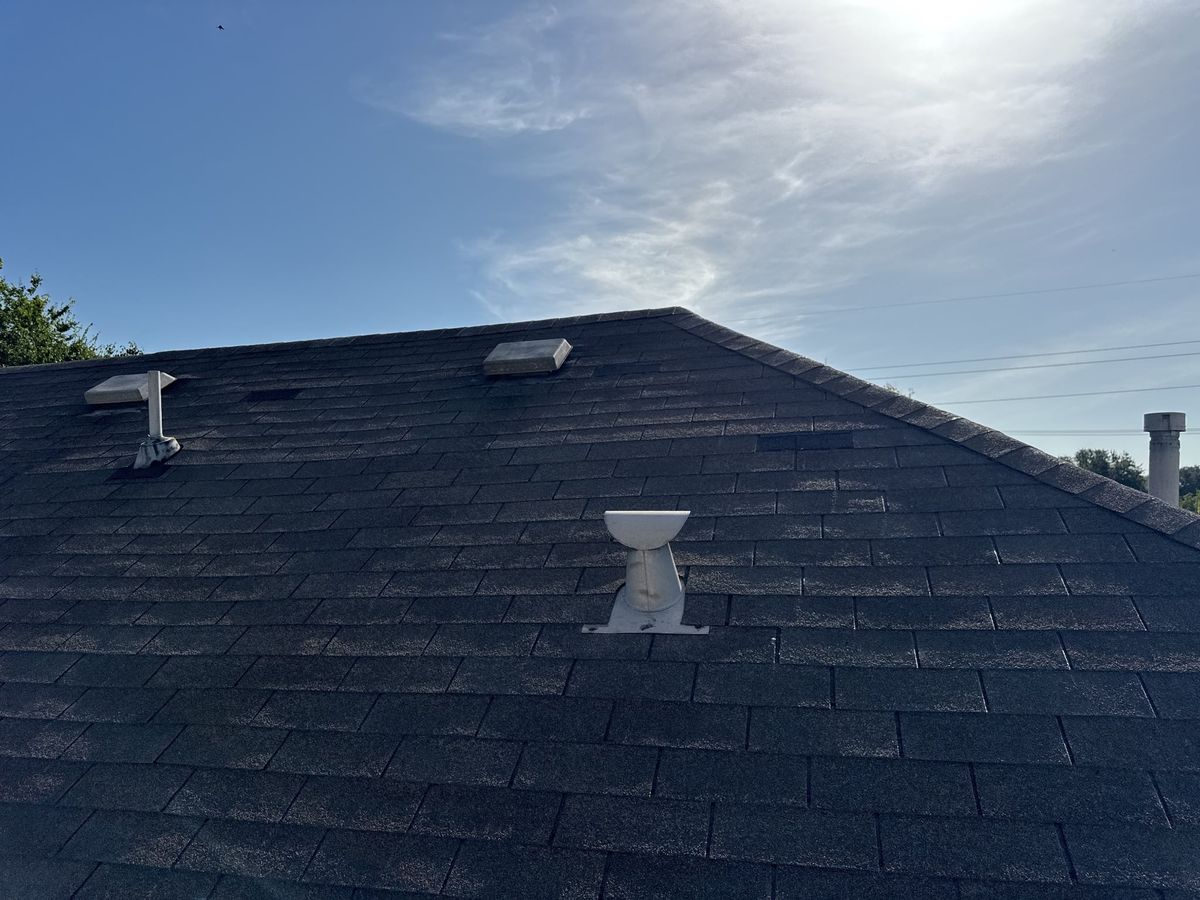
If a recent windstorm left you with lifted shingles, a bent fascia, or a section of missing roof covering, the first thing to figure out is not whether you have a claim — it's whether your repair costs are likely to exceed your wind/hail deductible. Many homeowner policies in Oldham County and the wider Amarillo area carry a percentage wind/hail deductible rather than a flat dollar amount, and that deductible is calculated from your dwelling limit, not from the size of the loss. A moderate wind event can produce real but limited damage that lands close to that threshold. Knowing which side of the line you're on tells you whether filing makes sense at all.
This post walks through how that math actually works, how to estimate your damage honestly, and what to do if your number and the carrier's number don't agree.
Why a moderate windstorm damages some homes and not others
Gusts in the moderate range — strong enough to peel back shingles, loosen ridge caps, tear at metal edge flashing, and throw debris — rarely level a well-built structure. What they do instead is find the weak points: aging or brittle shingles, previously lifted tabs, poorly fastened flashing, older fences, and detached structures like carports and sheds.
That means two houses on the same street can come out of the same storm very differently. A newer roof may shed a moderate gust with no functional damage, while an older one loses covering along a windward slope. Because the damage is often partial and slope-specific, the repair cost frequently lands in the gray zone near a percentage deductible — which is exactly why the deductible math matters before you assume anything.
Flat-dollar versus percentage wind/hail deductibles
Texas homeowner policies generally carry one of two deductible structures for wind and hail.
A flat-dollar deductible is a fixed number. If it's set at a specific dollar figure, that same amount applies whether the loss is small or large. It's simple to plan around because it never changes with your home's value.
A percentage wind/hail deductible is expressed as a percentage — commonly 1%, 2%, or 5% — and it is applied to a stated figure in your policy, almost always your Coverage A dwelling limit. In wind- and hail-prone regions like the Panhandle, percentage deductibles are common, and they are often higher than the all-other-perils deductible on the same policy. That's the detail that catches homeowners off guard: the deductible for a storm loss can be several times larger than the one that would apply to, say, a kitchen fire.
Your declarations page will state which structure applies and what the percentage or dollar figure is. Read it before you do anything else.
The math: your deductible comes from the dwelling limit, not the loss
This is the single most misunderstood point, so it's worth slowing down on. A percentage wind/hail deductible is calculated from your dwelling limit — the amount your home itself is insured for — and not from the amount of the damage.
Here's the mechanics, using round illustrative numbers. Suppose a home is insured for a dwelling limit of $300,000 and the policy carries a 2% wind/hail deductible. Two percent of $300,000 is $6,000. That $6,000 is what you absorb before the policy pays anything on a wind or hail loss — regardless of whether the damage totals $4,000 or $40,000.
So if that homeowner's roof repair came to $4,000, the loss would fall below the deductible and the policy would pay nothing, even though genuine storm damage occurred. If the repair came to $18,000, the deductible would be subtracted and the balance would be payable, subject to the policy's other terms.
To run your own figure: find your dwelling limit on the declarations page, find your wind/hail deductible percentage, and multiply. That product is the number your repair estimate has to beat before a claim produces a payment.
Estimating your repair cost before you decide
Once you know your deductible, the next task is an honest estimate of what it will actually cost to make the repairs — not a guess, and not a hope.
A few things make that estimate more reliable:
- Get a real scope, not a windshield glance. A roofer or a qualified estimator should look at every slope, not just the one facing the street. Wind damage is directional, and the worst of it is often on a slope you can't see from the ground.
- Account for what the repair really requires. Matching existing shingles, code-required upgrades, underlayment, flashing, and the labor to do it correctly all belong in the number. A repair that looks small can carry costs that aren't obvious from a photo.
- Separate storm damage from ordinary wear. Not every imperfection on an older roof is storm-related, and a defensible estimate distinguishes the two. If you want to understand how professionals tell those apart, our overview of wind versus hail damage in an appraisal explains what each peril leaves behind.
- Know which dollar figure you're comparing. A repair estimate can be expressed at replacement cost or at actual cash value after depreciation, and those are different numbers. Since it's the payable figure that interacts with your deductible, it helps to understand how ACV and RCV differ on a claim before you conclude your loss won't clear the threshold.
If a careful estimate lands well below your deductible, filing may accomplish little. If it lands at or above it, you have a claim worth pursuing. And if it lands right at the edge, that's precisely where the amount of the loss becomes the deciding question.
When your number and the carrier's number don't match
After you file, the carrier will inspect and produce its own estimate. On a moderate wind loss, it's common for the two estimates to differ — sometimes by enough to change whether the loss clears the deductible at all.
Those differences usually aren't about bad intentions. They come from real, explainable places: how many slopes each inspector counted as damaged, whether flashing and edge metal were scoped, which line items were included, how depreciation was applied, and what local material and labor pricing was used. Two competent professionals can look at the same roof and reach different totals for reasons that are entirely legitimate.
The important distinction is this: if you disagree about whether the loss is covered, that's a coverage question, and it isn't resolved through appraisal. If you agree the wind loss is covered but disagree about how much it costs to repair, that is an amount-of-loss dispute — and Texas homeowner policies contain a built-in mechanism for exactly that situation.
How the appraisal clause resolves an amount-of-loss gap
Most Texas property policies include an appraisal clause. It's not litigation and it's not a complaint against anyone — it's a resolution process both you and the carrier already agreed to when the policy was written.
When invoked, each side selects a qualified, independent appraiser. The two appraisers inspect the property and work to agree on the amount of loss. If they can't fully agree, they select a neutral umpire, and an agreement between any two of the three sets the binding amount of loss. Coverage decisions, deductible application, and legal questions stay outside this process — appraisal decides the number, and only the number.
On a moderate wind claim sitting near a percentage deductible, that can be decisive: if appraisal establishes a repair figure above your deductible, the loss clears it; if the agreed figure comes in below, it doesn't. Either way, the amount is settled by an evidence-based process rather than by two estimates talking past each other. If you'd like a local sense of how this plays out, our Amarillo insurance appraiser page describes how these disputes are handled in the Panhandle.
What to have in hand before you decide
Before you conclude anything about your wind claim, gather:
- Your declarations page, showing the dwelling limit and the wind/hail deductible structure.
- The deductible figure you calculated (percentage × dwelling limit).
- A thorough repair estimate covering every affected slope and component.
- Dated photos of the damage and any temporary repairs you made to prevent further loss.
- A clear read on whether your disagreement, if any, is about coverage or amount.
With those in front of you, the decision usually becomes straightforward: the math either clears the deductible or it doesn't, and if the sticking point is the size of the loss, you know the appraisal clause exists to settle it.
Talk it through before you decide
If you're weighing an Amarillo-area wind claim and aren't sure whether your repair costs will clear your deductible — or whether an amount-of-loss dispute is worth taking to appraisal — Marshall Services offers a free, no-obligation consultation. As an IAUA Certified Professional Appraiser and umpire, Marshall Smith can help you understand the process as a neutral, independent step. Call 972-322-0752 to talk it through.