Roof Age and Material: How to Answer for a Claim
Two facts about your roof come up early in almost every property claim. Here is how to find your roof's age, identify its material, and record both so the number stands up.
By Marshall Smith, IAUA CPAU Certified Insurance Appraiser · Published October 2, 2026 · 7 min read · Filed under Claim Documentation
The approximate age of your roof is how many years have passed since it was last fully installed or replaced — not since the house was built, unless the original covering is still up there. The material is the type of covering on the deck: most often asphalt (three-tab or architectural) shingles, but also metal, clay or concrete tile, wood shake, slate, or a flat-roof membrane. If you can give an honest estimate of both — "architectural asphalt shingles, roughly twelve years old" — you have answered the question well enough for a claim file. The rest of this post is how to arrive at those two answers with confidence and how they get used once you do.
Why this pair of questions comes up so early
Roof age and roof material are among the first things an adjuster, an estimator, or an appraiser wants on the record, because together they anchor almost everything that follows. The material determines how the roof is measured, scoped, and priced — a square of architectural shingles and a square of standing-seam metal are not the same line item. The age speaks to the roof's condition and remaining useful life, which is the starting point for estimating depreciation on a replacement-cost calculation.
Neither figure decides whether your loss is covered. That is a separate determination your carrier makes under the terms of your policy. What age and material do is feed the measurement of the loss — the scope and the dollars — which is exactly what an appraisal exists to settle when the two sides disagree.
Finding your roof's age without guessing
Start with the paper trail, because a documented date beats an estimate every time. The strongest single source is the invoice or contract from the last roof replacement. If you bought the home with a newer roof, the seller's disclosure or the closing file may name the install year. A few more places the date hides:
- Permit records. Many jurisdictions require a permit for a full reroof. A quick call or online search of your city or county building department can surface the date a roofing permit was pulled.
- The roofer. If you know who did the work, their records may still show the job.
- Prior claim history. If the roof was replaced through an earlier insurance claim, that file establishes the date.
- Manufacturer markings. Some underlayment, shingle wrappers, or attic-side stampings carry production codes, though these tell you when the material was made, not installed.
If none of that exists, an approximate age is perfectly acceptable — that is why the question says "approximate." Estimate from what you know: when you bought the house, whether the roof looked new or worn then, and any work you remember. Say "approximately" and give your best honest range. What you should not do is report the age of the house as the age of the roof unless you genuinely believe the covering has never been replaced.
Identifying what your roof is actually made of
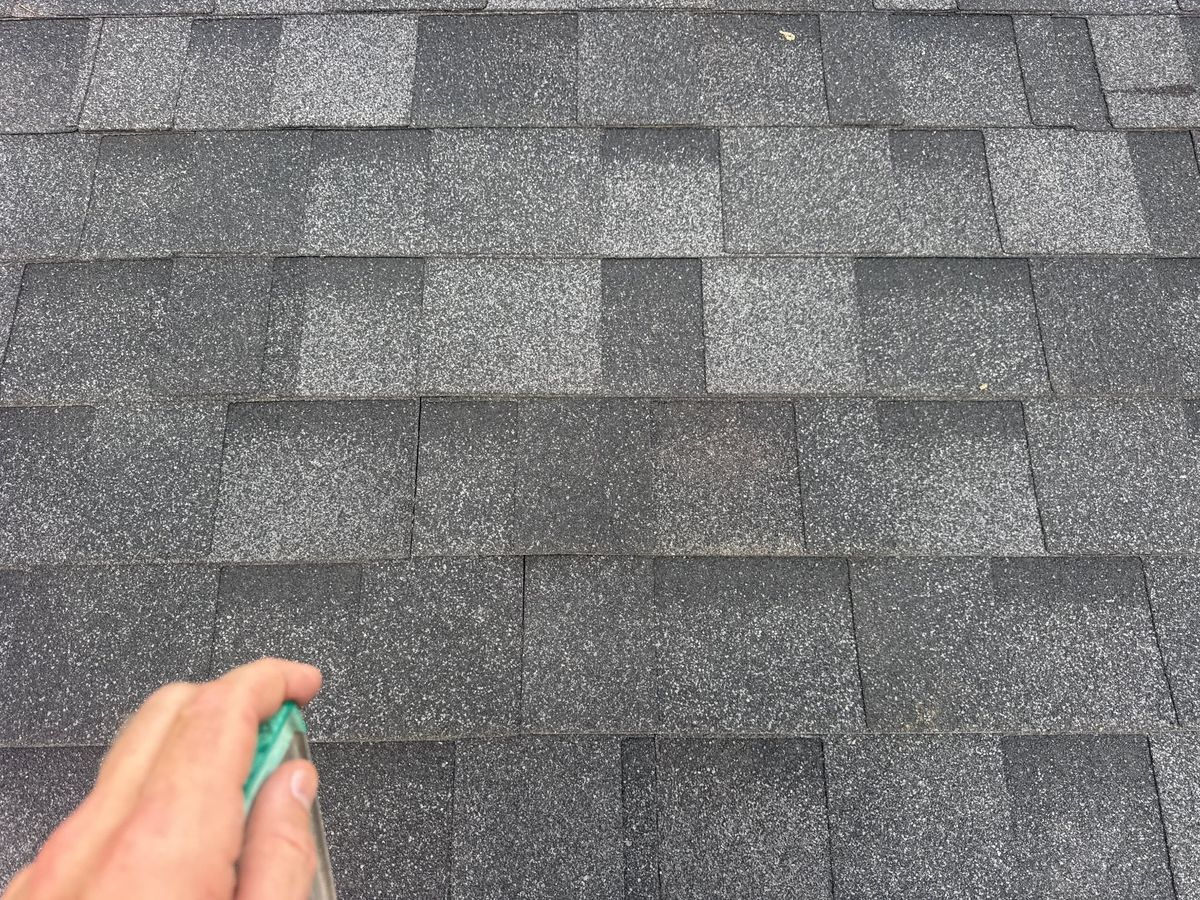
Most single-family homes in our service states wear asphalt composition shingles, and the practical distinction is between flat three-tab shingles and thicker, dimensional architectural (laminate) shingles. Architectural shingles have a layered, shadowed look; three-tab shingles are uniform rectangles. The difference matters to pricing, so note which you have if you can tell.
Beyond asphalt, you may have:
- Metal — standing-seam panels or metal shingles, common on newer and rural construction.
- Tile — clay (often terracotta-colored and barrel-shaped) or concrete (flatter, heavier, many profiles).
- Wood — shake or shingle, increasingly rare and regulated in wildfire-prone areas.
- Slate — natural stone, heavy and long-lived, mostly on older or high-end homes.
- Membrane — single-ply systems like TPO or modified bitumen on flat or low-slope sections.
If you are unsure, a ground-level photo and a photo from an attic vent or a safe vantage point usually let a professional identify the material without you climbing anything. You never need to get on a steep or storm-damaged roof to answer this question. Aerial imagery does the same job from a safer angle — one reason drone inspections have become a routine way to document both the material and its current condition.
When "approximate" is good enough — and when precision pays off
For an initial claim intake, a reasonable estimate of age and a correct identification of material is enough to get started. Precision earns its keep later, at the point where dollars are calculated.
Here is why. On a replacement-cost policy, the insurer typically issues the actual cash value first and holds back depreciation, which becomes recoverable once repairs are completed and documented — a sequence worth understanding in its own right, which we cover in ACV vs. RCV in an insurance claim. Depreciation is driven largely by age against the expected useful life of the material. A roof reported as twenty years old will carry more estimated depreciation than the same roof correctly documented at twelve. So an accurate, defensible age is not a formality — it moves the number. The same is true of material: pricing a tile or metal roof as if it were three-tab asphalt understates the cost of the loss.
This is also where some policies deserve a careful read. If your policy contains a roof-surfacing endorsement or an actual-cash-value schedule tied to roof age, the age of the covering may change how the roof loss is valued. Those terms vary widely, so check your own policy for its specific language rather than assuming. Whatever the policy says about valuation, remember the boundary: the policy and the carrier govern coverage, while appraisal settles the amount of loss.
How age and material feed an amount-of-loss appraisal
When a claim moves into appraisal because the two sides cannot agree on the dollar figure, roof age and material sit underneath the whole scope. Each side's independent appraiser uses the material to build a correct line-item estimate — the right shingle, the right accessories, the right labor — and uses the age and observed condition to reason about depreciation and remaining useful life. Where the two appraisers land on different numbers, the items they cannot reconcile go to a neutral umpire.
None of these participants decides whether the loss is covered. Appraisal determines the amount of loss only. Coverage is a separate determination made by the carrier under the policy and, where the parties disagree about it, resolved by a court — never by the appraisers or the umpire. What a well-documented roof age and an accurate material identification do is make the amount-of-loss analysis faster and far less contestable. When hail is the peril, that documentation is often the difference between a drawn-out back-and-forth and a clean resolution; our hail damage appraisal page walks through how roof evidence is weighed.
Record both so the number holds
Treat age and material as documentation, not conversation. Put the install date in writing with whatever source backs it — the invoice, the permit number, the closing document — and keep that source with your claim file. Photograph the roof covering clearly enough that the material and profile are unmistakable, and capture a few shots that show overall condition. If you have the original manufacturer and product line, note it; matching a discontinued shingle is a real cost driver that an estimate should reflect.
Doing this once, at the start, means you are never guessing under pressure later, and it means every professional who touches the file — adjuster, estimator, appraiser, or umpire — is working from the same two facts you established on your own terms.
Talk it through before the number hardens
If you are staring at that question on a claim form, or you are not sure whether your roof's age and material are being measured accurately in an estimate, that is a conversation worth having early. Marshall Services offers a free consultation to walk through where your roof file stands and how the amount of loss is being built. Call 972-322-0752 to talk with a certified property appraiser and umpire before the numbers set.
Frequently Asked Questions
Does the age of my roof mean the age of my house?
No — roof age means the years since the covering was last fully installed or replaced, which often differs from when the house was built. Only report the house's age as the roof's age if you genuinely believe the original covering has never been replaced. Check for a prior reroof through an invoice, a building permit, a seller's disclosure, or an earlier claim before you assume the two dates are the same.
Do I need an exact install date, or is an estimate acceptable?
An honest approximate age is acceptable for a claim, which is why the question uses the word "approximate." Give your best range based on what you know, and label it as an estimate. That said, a documented date — from an invoice, permit, or closing file — is stronger, because age drives depreciation on the valuation. If you can find a source in writing, use it instead of a guess.
How do roof age and material affect the amount of loss?
Material determines how the roof is scoped and priced, since different coverings are distinct line items, while age and condition inform the estimated depreciation and remaining useful life. Both feed the dollar figure an appraisal settles. They do not decide coverage, which the carrier determines under your policy. Accurate age and material simply make the amount-of-loss calculation more precise and harder to dispute.
Can an appraiser identify my roof's material if I'm not sure?
Yes — a clear ground-level photo, an attic-side view, or aerial imagery usually lets a professional identify the covering without anyone climbing a steep or damaged roof. Identifying the material and its profile correctly matters because pricing the wrong covering misstates the cost of the loss. You never need to get on the roof yourself to answer the question accurately.
Does my roof's age change what my policy pays?
It can affect how the roof loss is valued, but only your policy's own terms decide that. If your policy contains a roof-surfacing endorsement or an actual-cash-value schedule tied to age, the valuation may differ — so check your own policy language. Whatever it says, the boundary holds: the policy and carrier govern coverage and valuation terms, while appraisal settles the amount of loss when the two sides disagree.